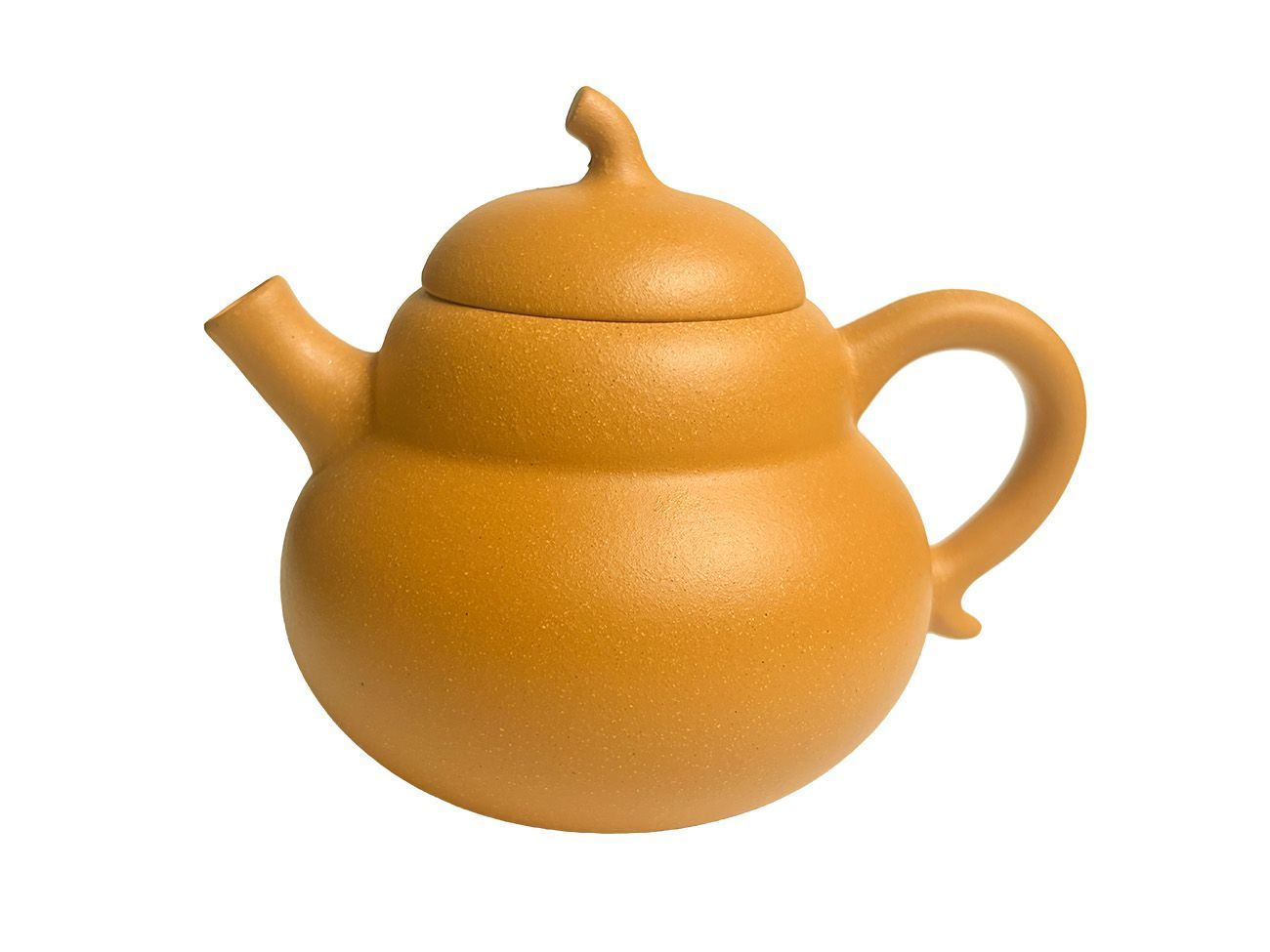
This is a small pear-shaped teapot, 110 ml, made in Yixing from duanni — one of the three broad families of Yixing zisha clay, alongside zini (the purple clays) and hongni (the reds). Duanni is the one that fires pale, in sandy golds and yellows rather than the purple-brown most people picture when they hear "Yixing". At this size it fills about three small cups, which is what you want for gongfu brewing, where you use a generous amount of leaf and pour many short infusions instead of one long steep.
The pear shape is one of the older forms in Yixing pottery, and it is a practical one rather than a decorative one. The rounded body gives whole leaves and tightly rolled oolongs room to open up, the tapered spout pours cleanly and cuts off cleanly, and the handle sits where your fingers expect to find it. That last part matters more than it sounds when you are pouring every twenty seconds.
Behind the spout there is a multi-hole filter, a cluster of small holes rather than the single opening older pots often have. It holds leaf back better than a single hole does, so a tea with some broken leaf in it will not clog the pour or end up in your cup. At 110 ml, where the pot fills and empties quickly, that is a practical detail rather than a decorative one.
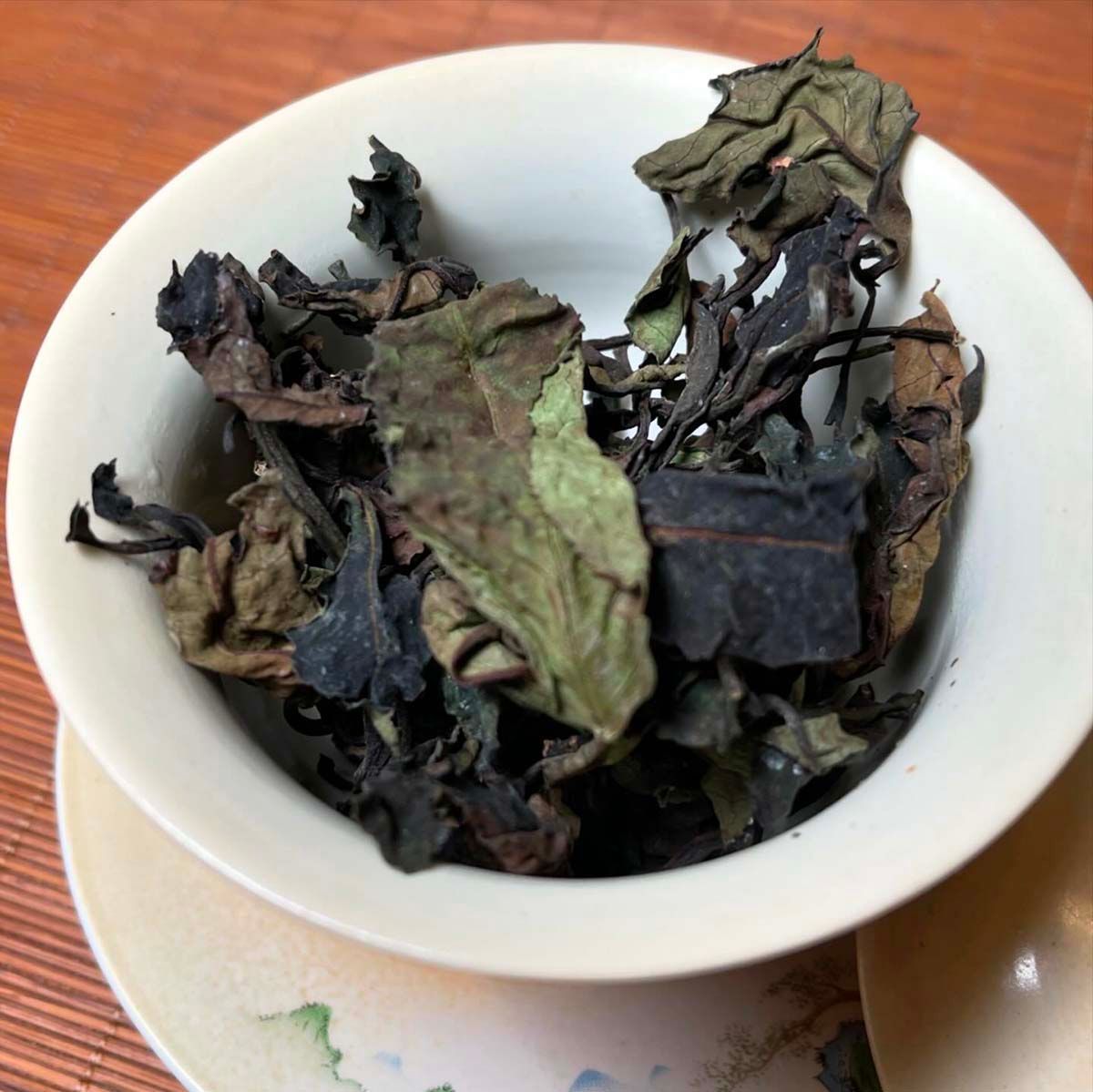
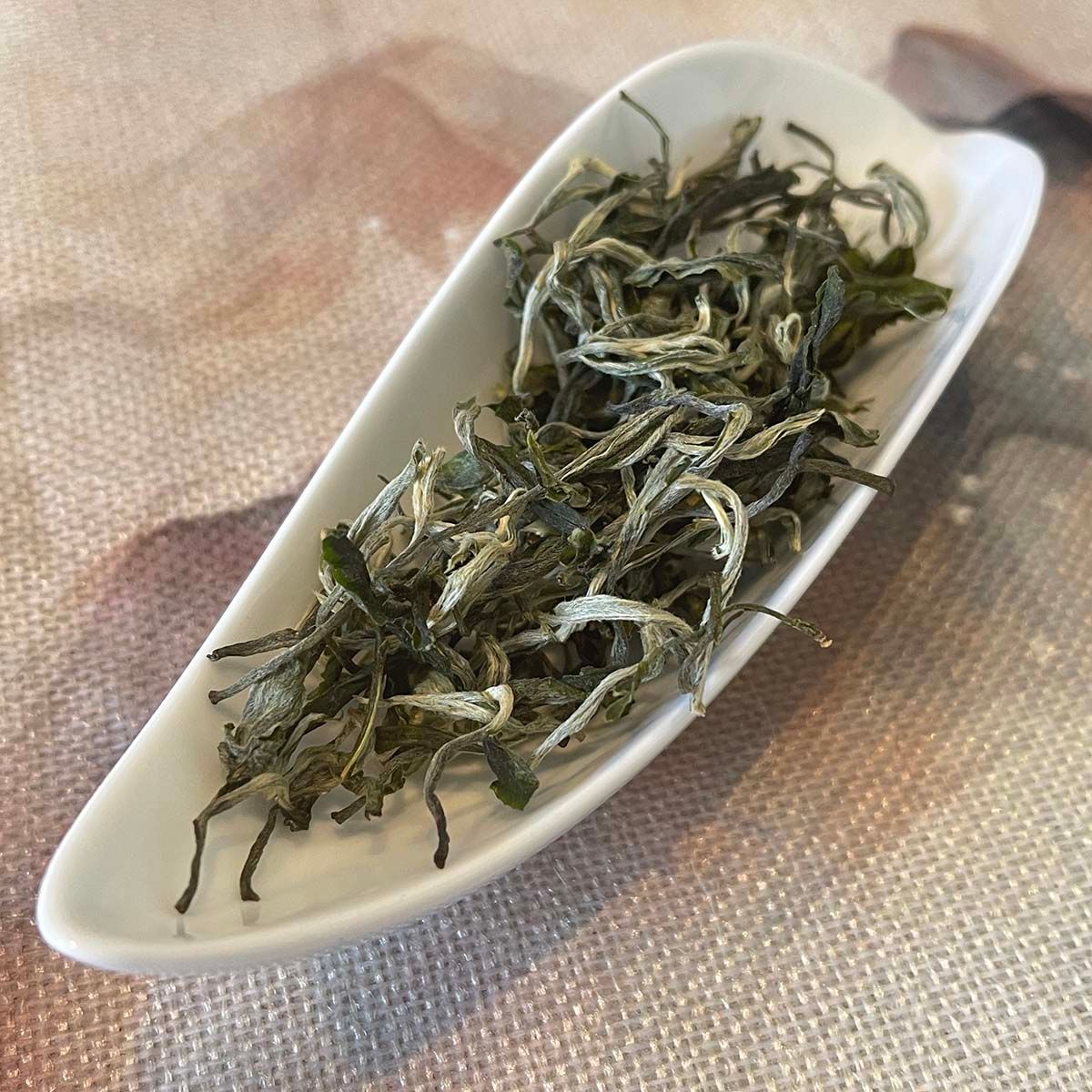
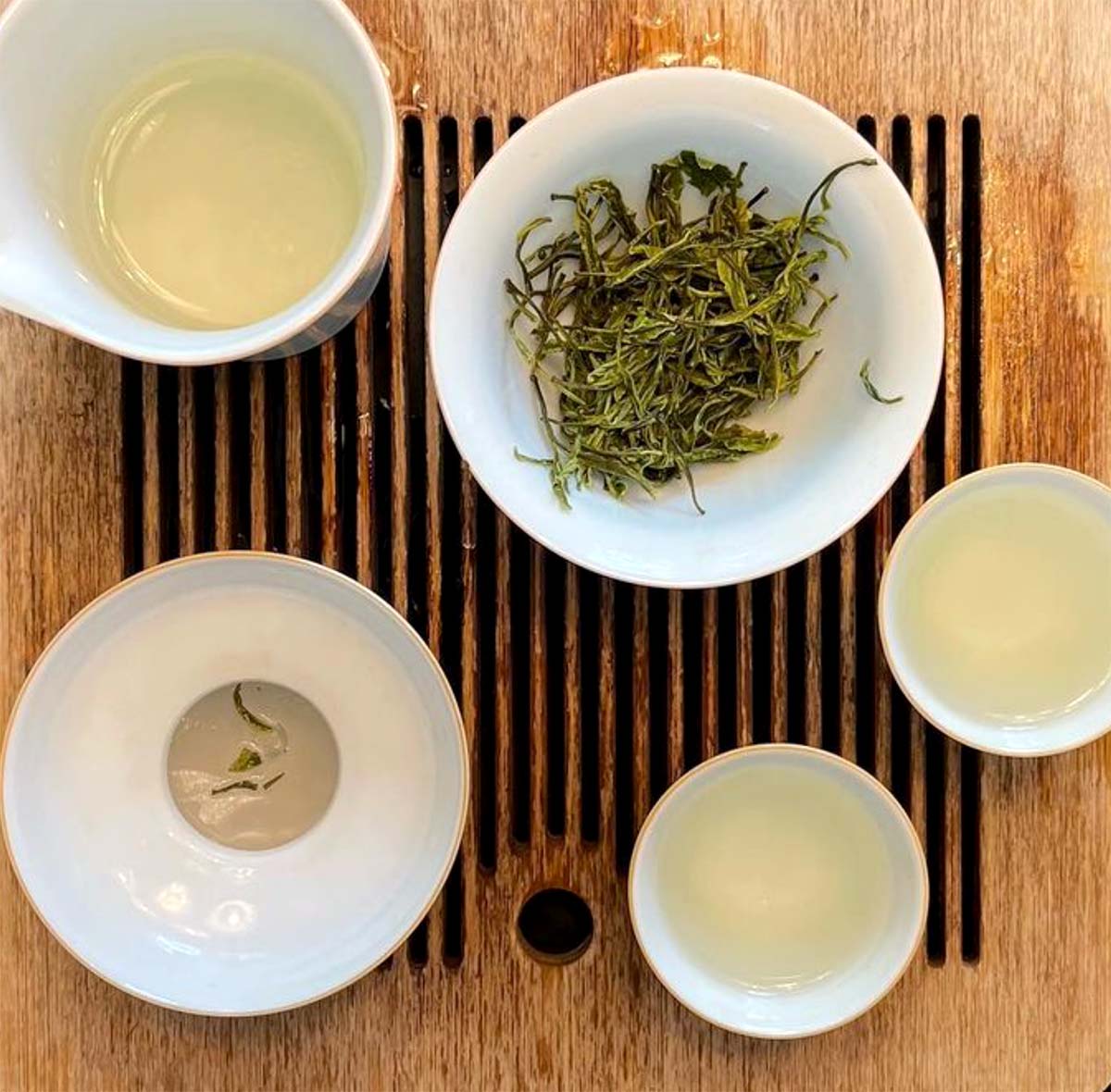
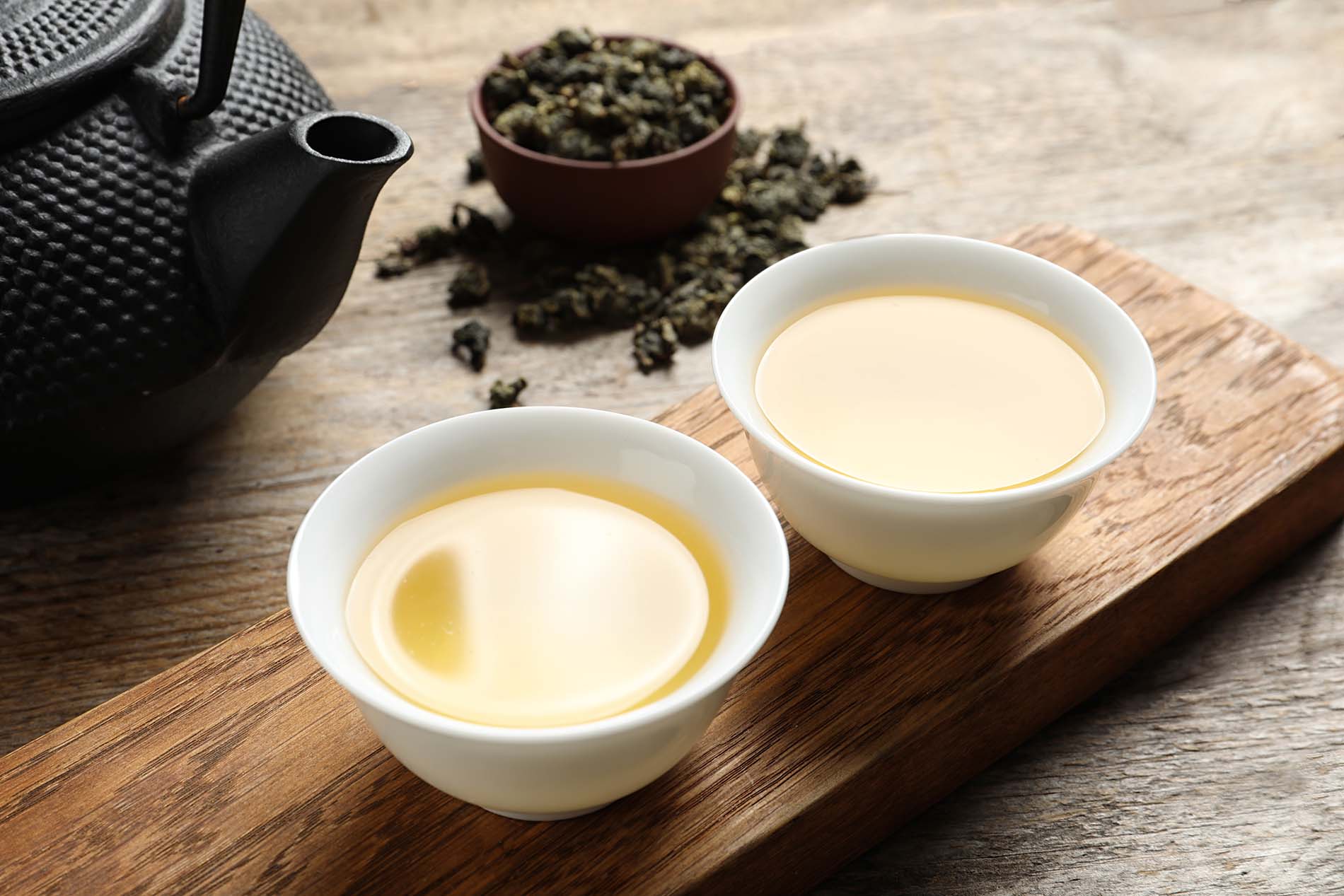
Yixing clay is unglazed, so it picks up a little of whatever you brew in it over time. That is the appeal, and it is the reason nearly everyone dedicates a pot to one tea, or to one family of teas, rather than moving it around. That part is not controversial. What people do argue about is which teas suit duanni best. One camp pours white tea, green tea
and lighter oolongs
and points to how gently the clay treats delicate leaf. The other reserves it for shu pu-erh, older sheng
and high-roast Wuyi oolongs, and points to how it rounds off a rough edge. Firing temperature appears to account for much of that disagreement, and we do not have the firing details for this particular pot. So the practical answer is the old one: brew a few of your own teas in it, pay attention, and then commit it to whichever one it flattered most.
Five of these came in with this restock. If you have been curious about brewing gongfu style and have never had a pot of your own, this is a sensible size to start with, and it is small enough to live on a desk.
Frequently Asked Questions
What is duanni clay?
Duanni is one of the three broad families of Yixing zisha clay, alongside zini (all the purple clays) and hongni (the reds, which include zhuni). It is defined less by a single ore than by the result: light, yellow or golden tones after firing. The iron oxide content is low, generally around 2% and no more than 4%, against roughly 7–8% for zini, which is why it fires pale rather than purple-brown. Benshan duanni, benshan lüni and huangjin duan are all subtypes within the category.
What tea should I brew in it?
Opinions genuinely split on this one. One camp uses duanni for white tea, green tea and lighter oolongs, and the other reserves it for shu pu-erh, aged sheng and high-roast Wuyi oolongs. Much of that disagreement seems to trace back to firing temperature, which varies from pot to pot and which we cannot confirm for this one. What nobody disagrees about is the dedication: pick one tea, or one family of teas, and stay with it, because that is how the seasoning builds evenly. Brew a few things you already drink, notice which one the pot flatters, and commit to that.
Does it have a filter?
Yes. There is a multi-hole filter set behind the spout, which is the configuration most people prefer at this size. It strains more effectively than a single hole without being fussy to clean.
How do I season a Yixing teapot?
Seasoning is not a separate ritual so much as a result of ordinary use. Rinse the pot with hot water before brewing, brew your chosen tea in it regularly, rinse it with hot water afterwards, and let it air-dry with the lid off. Over months the clay develops a soft sheen. Soap will interrupt this, which is why it is left out.
Care Instructions:
Hand wash with hot water and gentle scrubbing only. Skip soap and detergent entirely — the clay is semi-porous and will hold onto them, and you will taste it in the next cup. Rinse it, leave the lid off, and let it dry all the way through before putting it away. It should never go in the dishwasher or the microwave.