
Bamboo Tea Tray for Gong Fu Cha: A Complete Guide
Quick Answer: A bamboo tea tray — also called a tea boat or cha pan — is the foundation of a gong fu cha setup. It holds your gaiwan, teapot, cups, and fairness pitcher in one organized surface while catching overflow water from rinsing, warming, and multiple short infusions. Bamboo is the material of choice because it is naturally water-resistant, lightweight, sustainable, and odor-neutral — it won't compete with the aroma of your tea the way seasoned wood or lacquer can. Chinese bamboo tea trays have been used since the Tang Dynasty (618–907 AD) and remain the most practical and accessible entry point into a proper gong fu setup today. Adhara Tea & Botanicals carries a Natural Bamboo Tea Tray in two sizes starting at $22 — purpose-built for gong fu cha brewing.
What Is a Bamboo Tea Tray — and Why Does It Matter?
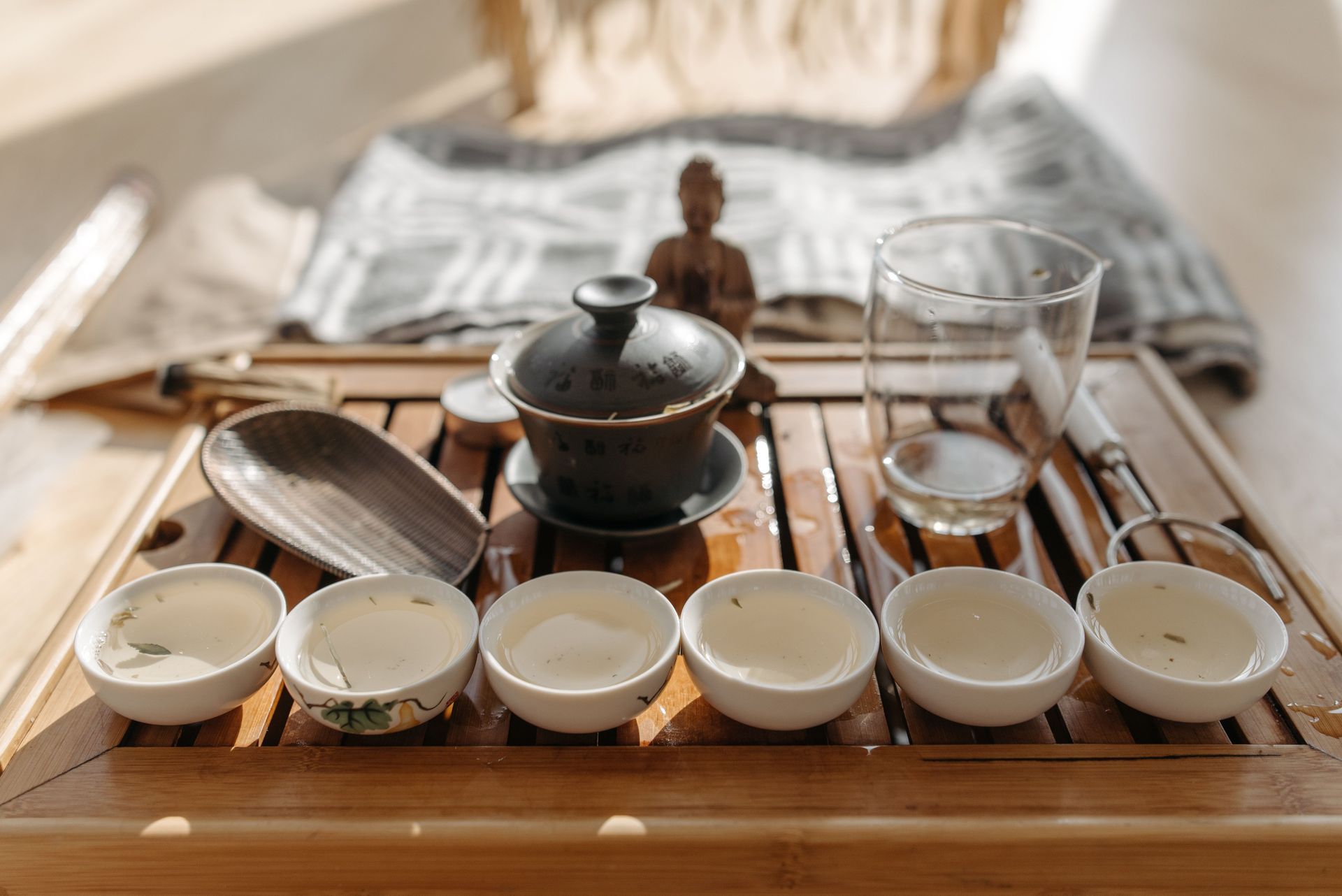
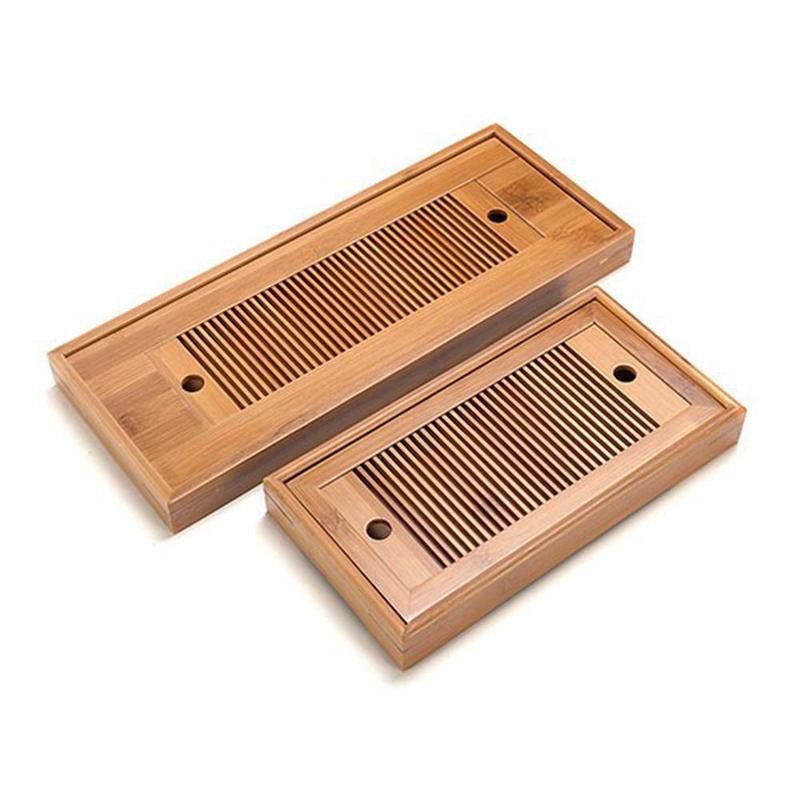
A bamboo tea tray is a slatted, raised platform designed to hold your tea ware during a brewing session. The slatted top allows water to drain through — a critical function in gong fu cha, where you are constantly pouring hot water over vessels to warm them, rinsing cups between pours, and managing the overflow from a small high-ratio brew. Without a tray, your table surface becomes the casualty of every session.
Beyond the practical drainage function, the tray defines your tea space. It gives the session a physical boundary — everything within the tray belongs to the ritual, everything outside it is the rest of the world. For many gong fu practitioners, setting up the tray is the first act of the session, a small but deliberate transition into the focused, unhurried pace that good tea demands.
In Chinese tea culture the tray is called a cha pan(茶盘) or cha chuan(茶船) — tea boat — the latter name reflecting how it cradles the teapot the way a boat sits on water. Both names are still used today.
A Brief History — From Tang Dynasty to Your Tea Table
Tea culture in China took formal shape during the Tang Dynasty (618–907 AD), when the scholar Lu Yu wrote the Cha Jing — the Classic of Tea — codifying the tools, methods, and philosophy of tea preparation for the first time. Among the implements Lu Yu described were early versions of the tea tray, used to organize the many vessels required for Tang-style powdered tea preparation.
During the Song Dynasty (960–1279 AD), tea culture became even more refined. Tea competitions were held among scholars and aristocrats, and the vessels used — including the tray — became objects of artistic expression as much as practical tools. Trays were made from lacquered wood, porcelain, and increasingly from bamboo, which proved more resilient to the constant moisture of a tea session than many alternatives.
Bamboo became the dominant material for everyday tea trays because it solved a practical problem elegantly: it is naturally resistant to water, does not warp or crack as readily as hardwood under repeated wet-dry cycles, and is abundant throughout the tea-growing regions of China. By the Ming Dynasty (1368–1644 AD), when loose leaf tea and the gong fu brewing method began to emerge, the bamboo tea tray had settled into roughly the form we recognize today — a slatted surface over a collection basin, with enough real estate for a teapot, cups, and a fairness pitcher.
That basic form has endured for centuries because it works. The best tools usually do.
Why Bamboo? Comparing Tea Tray Materials
Bamboo tea trays compete in a market that includes stone, hardwood, lacquered wood, ceramic, and resin. Each material makes different tradeoffs. Here is how bamboo stacks up against the alternatives your gong fu setup is likely to encounter.
- Bamboo vs. Stone (slate, granite, purple clay): Stone trays are beautiful and extremely durable, but they are heavy — a large stone tray can weigh several kilograms — and cold to the touch, which can pull heat from your cups and teapot faster than you want during a session. Stone is also significantly more expensive. Bamboo is lighter, warmer, and far more practical for everyday use or travel setups.
- Bamboo vs. Hardwood: Solid hardwood trays are aesthetically striking, particularly in figured or dark woods. The tradeoff is maintenance — hardwood requires regular oiling, can crack if allowed to dry out completely between sessions, and will absorb water and odors over time if not properly sealed. Bamboo is technically a grass, not a wood, and its cellular structure makes it more dimensionally stable under moisture cycles. It requires less maintenance and stays neutral in scent.
- Bamboo vs. Lacquered Wood: Lacquer trays look polished but can chip, and the lacquer itself introduces a surface that sits between you and the material. For a practice as sensory as gong fu cha, there is something to be said for a material that is simply what it is.
- Bamboo vs. Resin/Plastic: Resin trays are inexpensive and easy to clean but feel at odds with the intentionality of a gong fu session. The material matters. Bamboo is sustainable, natural, and aged by use in a way that synthetic materials are not.
For most practitioners — especially those building their first gong fu setup or looking for a reliable everyday tray — bamboo hits the right balance of durability, weight, aesthetics, maintenance, and price.
How a Bamboo Tray Works in a Gong Fu Cha Session
If you have not brewed gong fu style before, the tray's function becomes immediately obvious once you do. A typical gong fu session with a 100ml gaiwan and four small cups involves the following water events — all of which produce overflow that needs somewhere to go:
- Pre-warming the gaiwan: Fill the gaiwan with hot water, swirl, discard. Warms the vessel and prepares it for the first infusion.
- Pre-warming the cups: Fill each cup with hot water from the gaiwan or kettle, swirl, discard. Prevents the first pour from cooling on cold ceramic.
- The rinse infusion (optional): For aged teas, compressed teas, or any tea that may have surface dust from processing — a 5-second pour, discarded. This water goes onto the tray.
- 6–8 actual infusions: Each 15–30 seconds. Overflow from the gaiwan lid, drips from the fairness pitcher spout, and any overpour between vessels — all landing on the tray surface.
- End-of-session rinse: Final hot water flush of all vessels before drying.
Over a full session you may pour 800–1,200ml of water across all these steps while consuming only 400–600ml of tea. The tray manages the rest. Without it, a gong fu session is genuinely messy. With it, the entire process feels clean, contained, and intentional — which is rather the point.
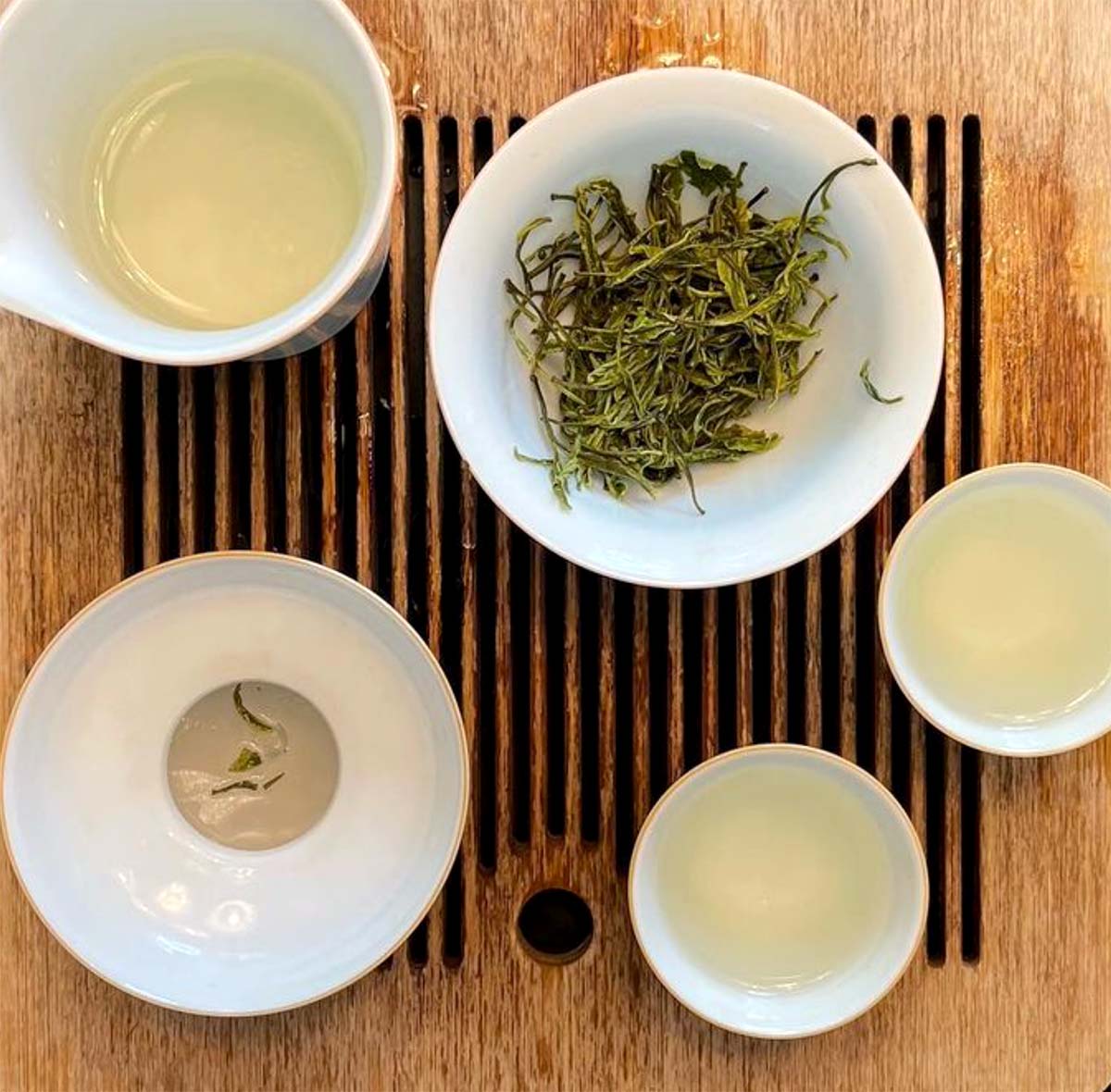
The gong fu cha image in Adhara's content library shows this setup in practice: gaiwan centered on the tray, cups arranged in a line or arc, kettle close at hand. The tray makes that composition possible.
Shop Adhara's Natural Bamboo Tea Tray →
Choosing the Right Size — Small vs. Large
Adhara's Natural Bamboo Tea Tray comes in two sizes. The right choice depends on how you brew and how many people you typically share tea with.
Small — 10.63" × 5.59" × 1.18"
The small tray is ideal for solo sessions or brewing for one or two guests. It comfortably accommodates a standard 75–100ml gaiwan or small teapot alongside two to three small gong fu cups and a fairness pitcher. If you primarily brew alone or with a single tea companion, the small tray keeps your setup compact and focused. It is also the better choice for a desk or side table where surface area is limited, and for travel or on-the-go tea sessions.
Large — 15.15" × 6.10" × 1.18"
The large tray opens up your setup considerably. It handles a full gong fu arrangement — a larger 150–200ml teapot or gaiwan, a fairness pitcher, four to six cups, and tea tools — without feeling crowded. If you regularly brew for a group, host tea sessions, or simply prefer a more generous workspace, the large tray gives you room to move. It is also the right choice if you use a larger gaiwan or yixing pot as your primary brewing vessel.
Not sure which to choose? If you brew solo most of the time, start with the small. If you brew for others or use a larger teapot, go large. Both are the same height (1.18") and the same bamboo construction — the only difference is surface area.
Shop Small or Large — Natural Bamboo Tea Tray, $22 →
Caring for Your Bamboo Tea Tray
Bamboo is low-maintenance compared to hardwood or stone, but a few habits will significantly extend the life of your tray and keep it looking good through years of daily use.
- Rinse after each session: A quick rinse under the tap removes tea residue before it stains. Bamboo's tight grain resists staining better than wood but benefits from prompt cleaning all the same.
- Dry completely between sessions: The most important habit. Standing water in the drainage basin or on the surface encourages mildew. After rinsing, empty the basin, prop the tray upright briefly if needed, and allow it to air dry fully before storing.
- Occasional conditioning: Every few months, a light application of food-grade mineral oil (or bamboo-specific conditioning oil) rubbed in and wiped off will replenish the natural moisture content of the bamboo, preventing surface cracking over time. This is the same principle used to maintain bamboo cutting boards.
- Avoid soaking: Don't submerge the tray or leave it sitting in a pool of water. The slats are designed to drain, not to hold. Prolonged immersion will cause the bamboo to swell and eventually split at the joints.
- Avoid the dishwasher: The combination of high heat and prolonged moisture exposure will warp and crack bamboo quickly. Hand wash only.
With basic care a good bamboo tea tray lasts years. The surface develops a patina over time — a slight deepening of color from tea contact and handling — that many practitioners find adds to rather than detracts from the tray's character.
Ready to Set Up Your Gong Fu Space?
Adhara Tea & Botanicals carries the Natural Bamboo Tea Tray in small and large — both purpose-built for gong fu cha, both priced accessibly at $22. We source teaware the same way we source tea: looking for what actually works in practice, not what looks good in a product photo.
If you are building your first gong fu setup or replacing a tray that has seen better days, this is a solid, no-fuss foundation for your tea space.
Shop the Natural Bamboo Tea Tray →
Questions about teaware or which tray fits your setup? Reach us at contact@adharatea.com
Frequently Asked Questions
What is a bamboo tea tray used for?
A bamboo tea tray — also called a cha pan or tea boat — provides a dedicated surface for gong fu cha brewing. Its primary function is water management: the slatted top allows overflow water from warming vessels, rinsing cups, and multiple infusions to drain away from your brewing surface. Beyond drainage, it organizes your tea ware — gaiwan or teapot, fairness pitcher, and cups — into a contained, intentional setup. The tray is one of the most practical investments in a gong fu tea practice because it makes the session cleaner, more organized, and more focused.
Why is bamboo a good material for a tea tray?
Bamboo is naturally water-resistant, making it well-suited for the constant moisture of a gong fu cha session. Unlike hardwood, bamboo's cellular structure is more dimensionally stable under repeated wet-dry cycles, meaning it is less likely to warp or crack with regular use. It is also lightweight, sustainable, and odor-neutral — it won't absorb or impart aromas that interfere with your tea. Compared to stone trays, bamboo is significantly lighter and more affordable while delivering comparable durability for everyday brewing.
What size bamboo tea tray do I need?
The right size depends on how you brew and how many people you share tea with. The small tray (10.63" × 5.59") is ideal for solo sessions or brewing for one to two guests — it fits a standard gaiwan, two to three cups, and a fairness pitcher. The large tray (15.15" × 6.10") is better suited for group sessions, larger teapots, or anyone who prefers more room to work. If you primarily brew alone and have limited space, start small. If you regularly brew for others or use a larger yixing pot, go with the large.
How do I clean and care for a bamboo tea tray?
Rinse the tray with warm water after each session to remove tea residue, then allow it to dry completely before storing — this is the most important habit for preventing mildew. Every few months, apply a light coat of food-grade mineral oil to condition the bamboo and prevent surface cracking. Avoid soaking the tray in water or putting it in the dishwasher, as prolonged moisture exposure will cause swelling and splitting. With basic care, a bamboo tea tray will last for years and develop a natural patina from regular use.
What is the difference between a tea tray and a tea boat?
The terms are often used interchangeably, though they describe slightly different forms. A tea tray (cha pan, 茶盘) typically refers to a larger, flat surface that holds the full tea ware arrangement — teapot or gaiwan, cups, and pitcher. A tea boat (cha chuan, 茶船) more specifically refers to a smaller saucer or platform designed to cradle a single teapot, catching overflow from the pot itself. In modern usage, bamboo tea trays often serve both functions — they are large enough to organize an entire setup while the drainage basin handles overflow from all vessels.